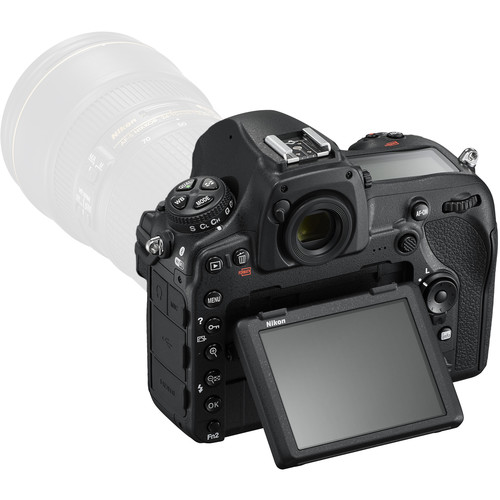
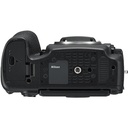
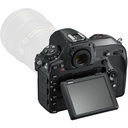
(49,161 actuations)
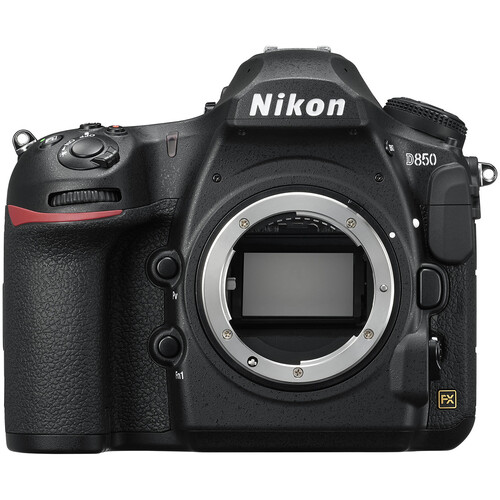
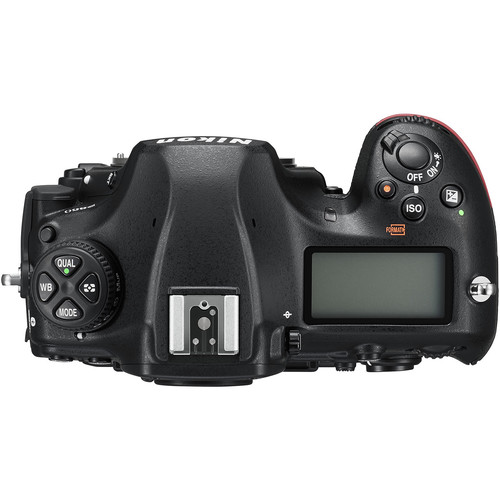
The Nikon D850 is a multimedia DSLR that
brings together robust stills capabilities along with apt movie and time-lapse
recording. Revolving around a newly designed 45.7MP BSI CMOS sensor and proven
EXPEED 5 image processor, the D850 is clearly distinguished by its high
resolution for recording detailed imagery. The back-illuminated design of the
sensor is able to acquire greater detail and clarity when working in low-light
conditions, and the sensor also forgoes an optical low-pass filter for improved
sharpness. Working in conjunction with the sensor is the EXPEED 5 image
processor, which together afford a 7 fps continuous shooting rate for up to 51
consecutive frames, an expandable sensitivity range from ISO 32 to 102400, and
4K UHD video recording using either a DX crop or the entire area of the
full-frame sensor.
An 8K time-lapse recording mode is also available, as well
as additional specialized recording modes for digitizing film negatives and for
focus stacking applications. Benefitting the imaging capabilities is an
advanced Multi-CAM 20K 153-point AF system, which debuted with the flagship D5
and offers 99 cross-type sensors for refined focusing accuracy in a variety of
lighting conditions. Checking off a number of boxes for multimedia
image-makers, the D850 positions itself as not only a high-resolution DSLR but
also as a camera for speed, movies, and low-light shooting needs.
Balancing the versatile imaging features, the D850 is also
equally refined in its physical design. A large optical pentaprism offering a
wide field of view and 0.75x magnification affords photographers a bright,
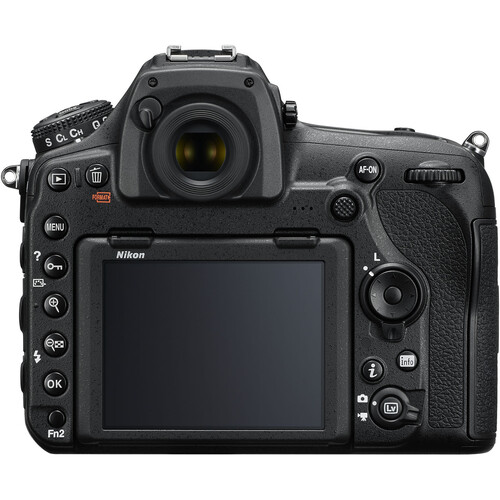
clear, and realistic view for critical shooting needs. Conversely, a 3.2"
2.36m-dot LCD touchscreen is also available for live view shooting, playback,
and menu navigation, and features a tilting design to suit working from high
and low angles. A weather-sealed design is also employed, to suit working in a
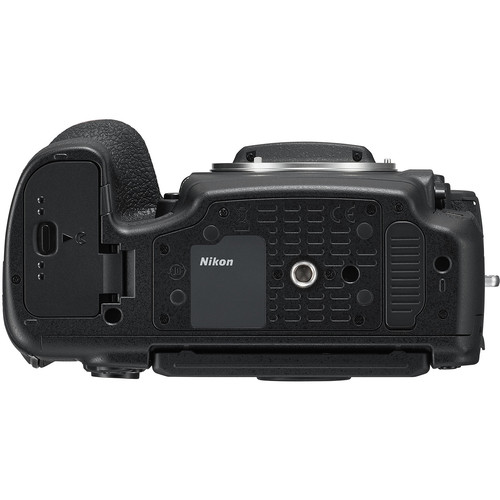
variety of environmental conditions, and the optional MB-D18 grip can be added
to boost overall shooting times and continuous shooting rates. Additionally,
built-in SnapBridge allows for wireless sharing of low-resolution imagery and
remote live view use on a linked mobile device, and an optional WT-7a Wireless
Transmitter can also be used for faster wireless transferring of files.
Complementing the rendering capabilities and speed of the
image sensor is the robust Multi-CAM 20K AF system, which features 153 total
phase-detection points, including 99 cross-type sensors for improved subject
recognition, and 55 of the points are selectable for greater compositional
freedom. Benefitting the use of super telephoto lenses and teleconverters, 15
of the points, including nine selectable points, are compatible with an
effective aperture of f/8, and all 153 points support working with effective
aperture of f/5.6 or brighter. Managing
the abundance of focusing points is a dedicated AF engine, which offers quick
response times to benefit tracking fast and randomly moving subjects, even at
the top 7 fps shooting rate. The AF engine also contributes to enhanced
focusing sensitivity, with all points capable of focusing -4 EV for working in
very dark, low-contrast situations. A first for Nikon DSLRs, a 45.7MP BSI CMOS sensor is used
for high-resolution shooting, impressive low-light quality, and fast readout
speeds to benefit continuous shooting, movies, and time-lapse recording. The
back-illuminated design of the sensor affords noticeably cleaner
high-sensitivity output for reduced noise when working at high ISO values, up
to a native ISO 25600, as well as vivid and smooth quality at sensitivities as
low as ISO 64. The sensor's design also omits the conventional optical low-pass
filter in order to achieve the greatest sharpness and resolution from the
sensor.
Benefitting the sensor is the apt EXPEED 5 image processor,
which affords a wealth of speed throughout the camera system, including the
ability to shoot continuously at 7 fps for up to 51consecutive 14-bit lossless
compressed raw files in a single burst. When working with the optional MB-D18
grip and EN-EL18a/b battery, this shooting rate can be increased to 9 fps, and
up to 30 fps shooting is possible when working in a DX crop mode during Silent
Live View. Utilizing the sensor and
processor attributes for more than just still imagery, the D850 is also a
more-than-capable multimedia camera. Video recording is possible at 4K UHD
(3840 x 2160) using either the full-frame area or a DX crop area in 30p, 25, or
24p frame rates. Full HD 1080p video recording is also supported at up to 120p
for slow motion playback, and video files can be saved to the in-camera memory
cards or as an uncompressed file to an optional external recorder via HDMI out.
Benefitting video recording, a dedicated power aperture button (Pv) makes it
possible to achieve smooth, continuous exposure transitions when switching from
light to dark areas, and Auto ISO can also be used to maintain a consistent
brightness when working in changing lighting situations. Focus Peaking can be
used to benefit manual focus control and a Zebra Stripes option is also
available to help detect over-exposed areas within the frame. Audio recording
can be handled using the built-in stereo microphone or an optional external mic
can be added via the 3.5mm stereo jack for greater control over quality, and
live monitoring is possible via the headphone jack.
The D850 also blends both still and video capabilities with the ability to
produce 8K time-lapses using the Interval Timer Mode or in-camera 4K time-lapse
movies, with the ability to record up to 9999 exposures for either method. This
system also makes use of a silent interval timer, which produces no shutter
noise, does not contribute to wear on the shutter mechanism, and is energy
efficient to maximize battery life. The
intelligent Scene Recognition System with 3D Color Matrix Metering III utilizes
a 180,000-pixel RGB sensor to evaluate and analyze all aspects within a scene,
including brightness, contrast, subject distance, and the scene colors, to
quickly determine an accurate exposure and white balance setting to best render
the scene at hand. The information gathered is also checked against onboard
reference images to ensure consistency from image to image in regard to
exposure, white balance, i-TTL flash settings, and subject-tracking AF
performance.