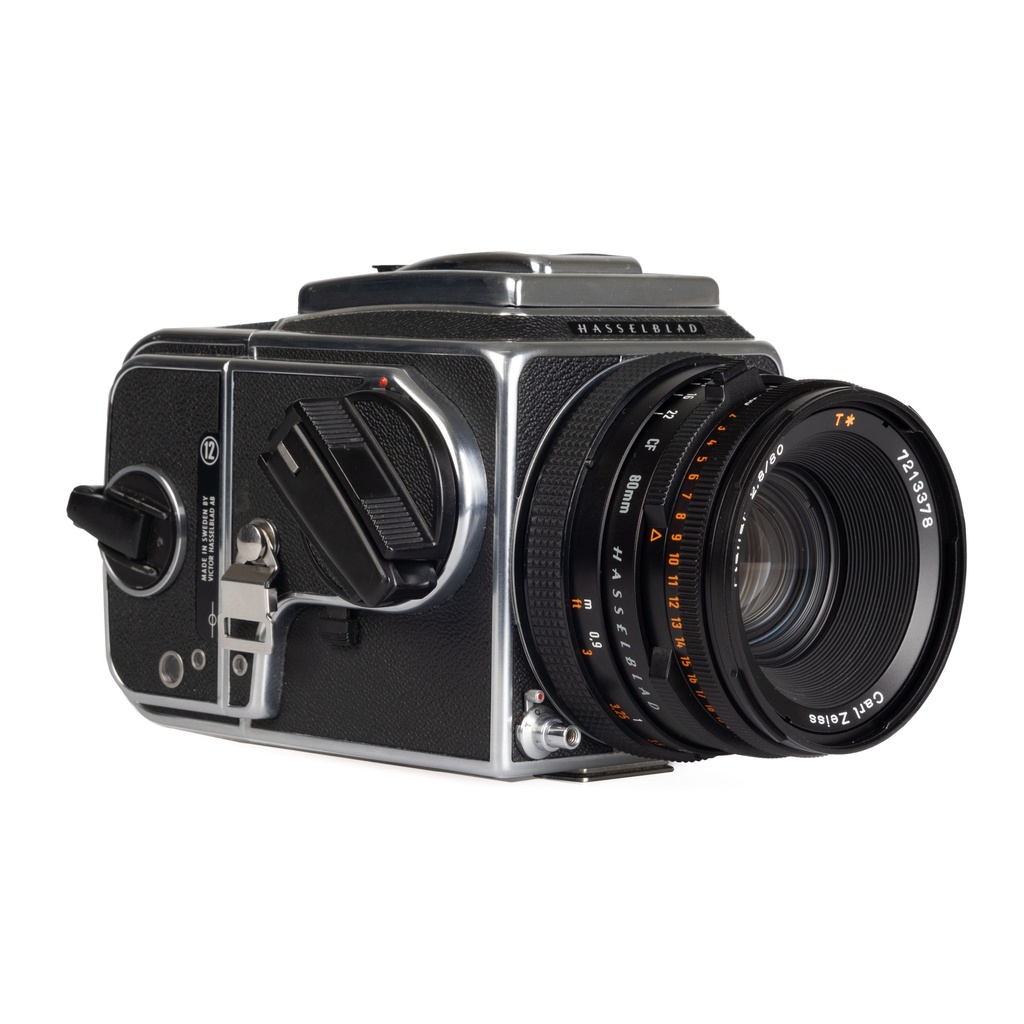
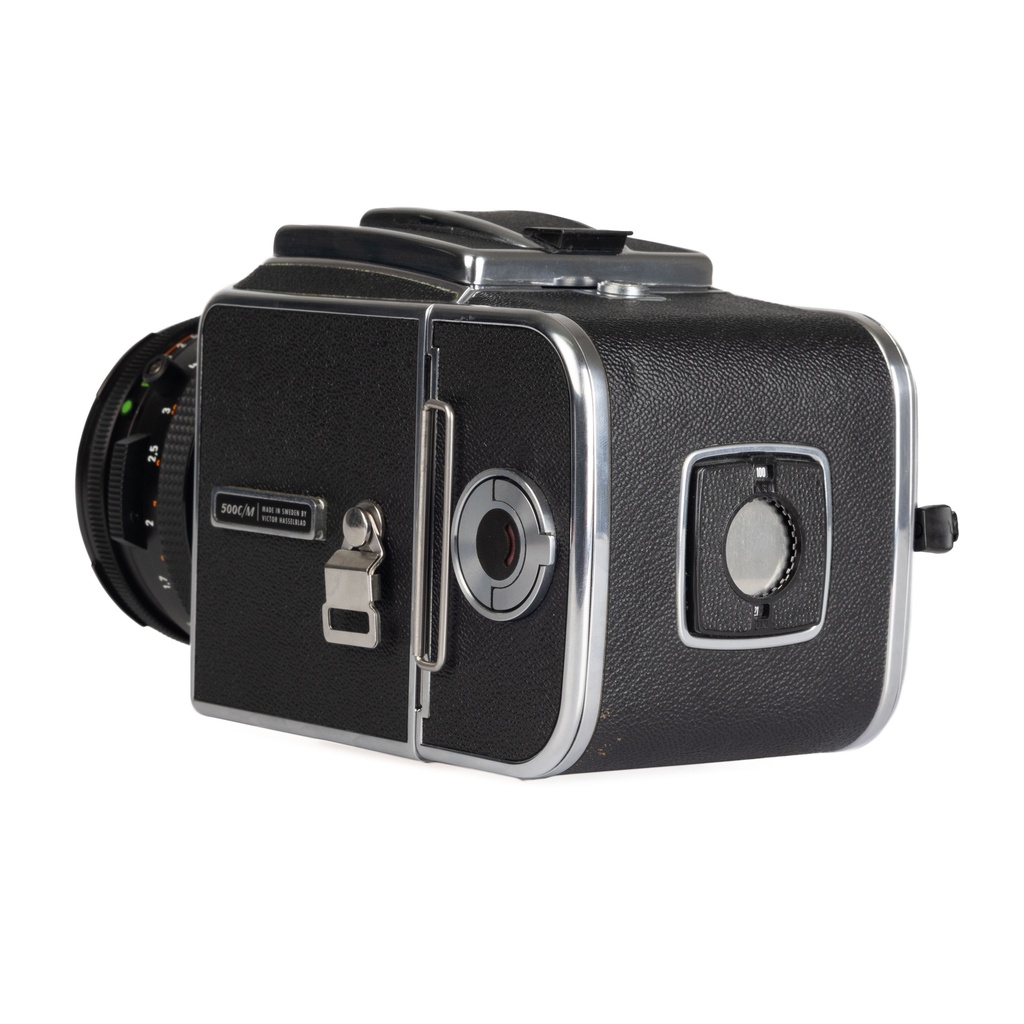
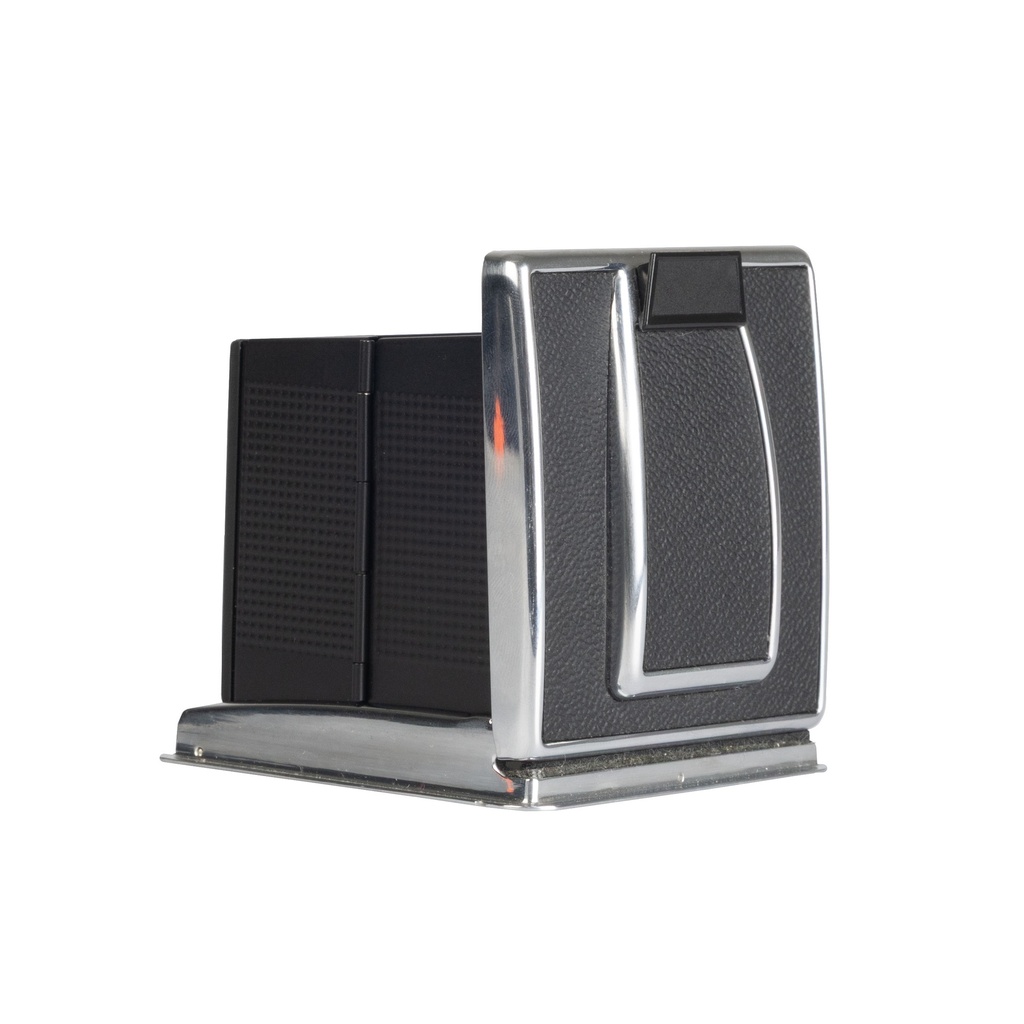
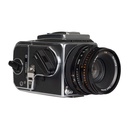
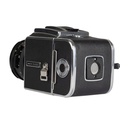
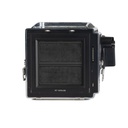
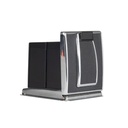
The 500C/M (C/Modified) was introduced in 1970, the only obvious change to the successful 500C being the ability of the user to interchange different types of focusing screens. Prior to this improvement, if a different screen were desired, one needed to be custom adapted (no optional screens for the 500C were available from the factory) and installed by a repairman. With this structural change, alternative screens were offered: a central microprism grid type, a split image range finder type, and a microprism with grid lines on it. Similar screens for the 500C were made available shortly after the C/M screens. A shortcoming identified by many users up until the mid 1980's was the relatively dim focusing screen in comparison to some other cameras. A number of non factory screens began to be made available by the early 1980's by companies like Beattie and the "Acute-matte" screen (sub-contracted from Minolta) was the factory response in 1987 to these aftermarket suppliers and to correct the problem of the dim focusing screen.
The early 500C/M cameras to at least serial number 125,000 were delivered with a 500C label on the accessory rail on the right side of the camera body. These cameras are sometimes described as "C-C/M" or "transition" bodies. These are not uncommon with at least 15,000 having been made. The early 500C/M bodies were available in chrome trim only but by late 1972, black bodies became available and it would appear that about 30-40 % of production since that time have been black (60-70% chrome). The standard 80mm Planar was silver anodized aluminum up to about 1973 when black lenses began to be supplied. The 500C/M cameras after 1982 were supplied with CF lenses.
The C/M body was available for more than 20 years in the same form albeit with a number of running changes to the internal mechanisms to improve performance and reliability.
One notable change was the deletion of the PC flash synch socket on the body after about 1973. This may be of importance for some special applications where special lenses and flash are required. The hole for thePC cable hook was discon-tinued in about 1982. The standard focusing hood was improved after 1984 so that it could be erected and folded far more easily. Also in 1985 the standard wind/shutter cocking knob was replaced by the previously optional rapid windcrank as a standard supplied item. After 1990 the C/M was only available as part of the "Classic" package (body, A12, 80 mm lens and wide strap). The classic was initially only available in chrome body finish but by 1992 a black body was also made available. The Classic bodies made in 1991 have a plaque mounted on the side of the body in commemoration of 50 years of existence of Victor Hasselblad's company.In 1992 the C/M body was again made available as a separate item and not just part of a package.
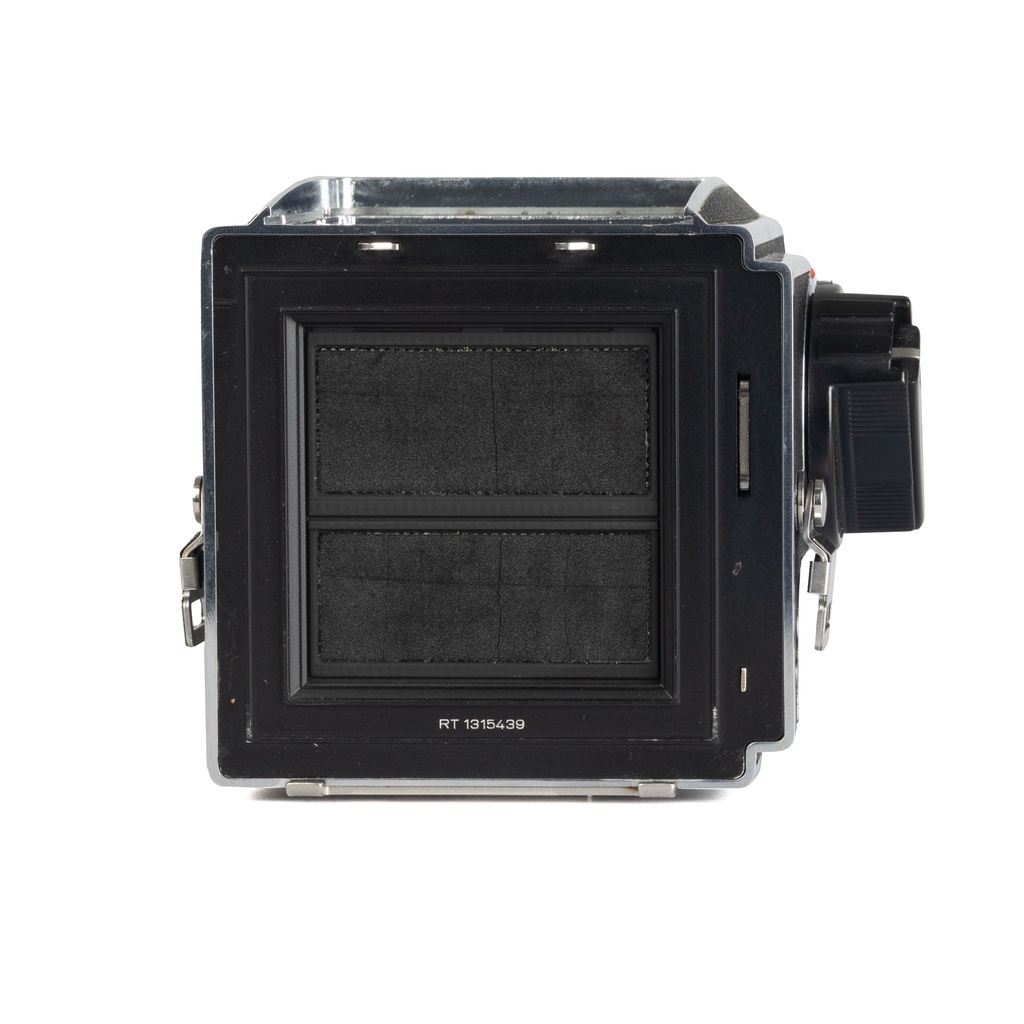
The 500C/M was last made in June 1994 with the introduc-tion of the 501C. The 500C/M has been the cornerstone of the Hasselblad sys-tem throughout the modern (post-1957) period. The total pro-duction was about 240,000 from 1971-1994. The 500C/M serialnumber range begins at 106701 and the first serial num-ber block ends at 204100 (approximately 100,000 cameras 1970-77). Subsequent serial number blocks run from 1,210,000 to 1,314,170 (104 171 cameras 1978-85) and then another serial number series starting at 1,400,000 about 1986. Estimates of the approximate serial number ranges of camera bodies produced each year to 1985 are given below.
This is the "standard" lens introduced with the 500C. Unlike the other lenses introduced with this new camera which were largely adaptations of 1000F lenses, this was an entirely new design: a Planar rather than the Tessar of the 1OOOF.
The first version of the lens (to 1961 up to serial number 2825569) was a six element design. There was also no depth of field preview lever. This first version of thelens generally are in serial number blocks 159xxxx, 257xxxx 266xxxx and 282xxxx. The front element of this lens is noticeably more curved than the later version. The early letter code name was OBPAL. A Zeiss specificationssheet is shown below.
By 1975 the lens barrels were manufactured with black coating. All of these have T" multicoating on the lens elements (there appear to be no 80mm black non-T* lenses). Oneof the variants of the black 80 T* which I findvery practical isthevery late version withthechrome filter ring:most of theblacklenses have a black filter ring made of aluminum which is easily marred when lens hoodsare put on and taken off. The 80mm Planars made after June 1976 have two protective ridges around the rear element to protect this vulnerable piece of glass.
The estimate of the number of 80mm "C" series Planars produced is about 210,000; about 100,000 in silver barrel, 110,000 in black barrel with T* coated lenses, with a few thousand silver T*. One of the analyses done on the Zeiss lens data collected over several years was to relate the number of bodies that have been ade, o the number of standard 80mm lenses estimated to have been supplied.It would appear that a fairly constant ratio of about 75% the numbers of 80mm lenses as there are bodies produced. This seems fairly consistent through time. This reflects the numbers of bodies sold without lebs or film agazine. In contrast, the number of 150mm lenses is about 35% of bodies and 50mm about 30% of bodies. This runs dow nto about 1.5% for the 500mm Teletessar.
The CF version of the 80mm Planar lenses was introduced in 1982. The prototype is shown in factory literature: 2598169. It was supplied with front (51643) and rear cap (50377) (or plastic lens tube) and in the late '80s and early 1990s pouch 58408.