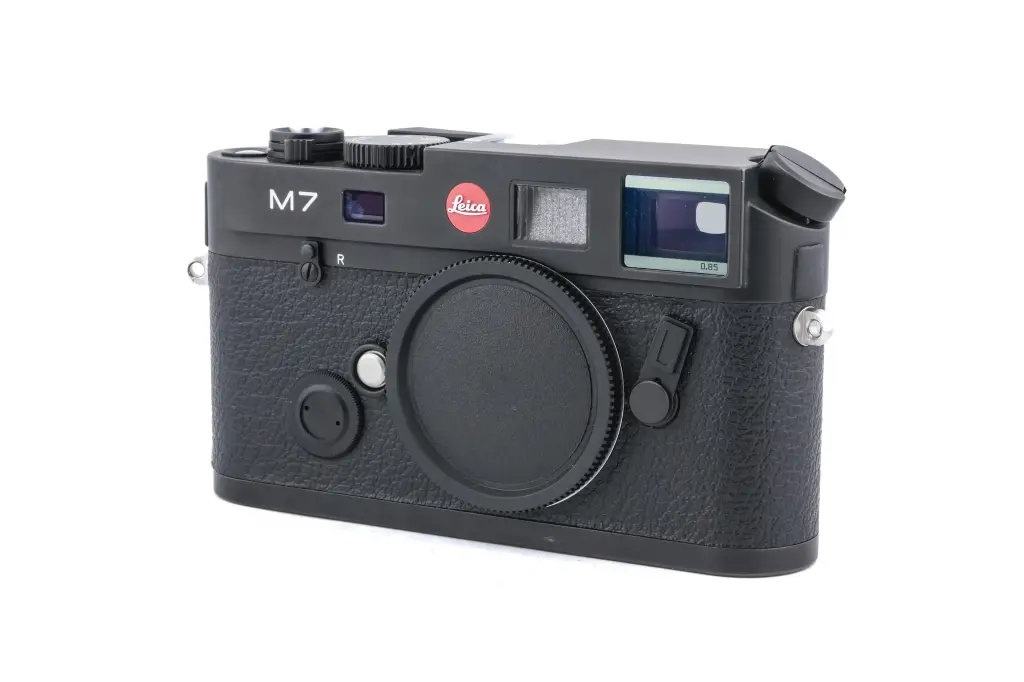
Leica M7 was introduced at the Photo Marketing Association (PMA) photo fair in Orlando at the end of February of 2002. Leica M7 was produced between 2002-2009439. "M7" had been a registered trademark of Leica Camera AG since June 14, 2002. Leica M7 was the first model in the M series to feature an aperture-priority mode357. It had an electronically controlled shutter capable of mechanically producing two different exposure times when necessary. This aperture-priority mode, along with the shutter speed display in the rangefinder, was subsequently adopted by all digital M models. Additionally, the housing and technical specifications were consistent with those of the Leica M6 TTL.
This camera featured aperture priority auto exposure and displayed the selected shutter speed in the viewfinder. The shutter speed range extended from 32 seconds to 1/1000 of a second, with an AE lock that activated by slightly pressing the shutter release. The display brightness adjusted automatically according to ambient light.
Flash synchronization up to 1/1000 of a second was possible (non-TTL) when using a 3502 adapter and a compatible flashgun. The camera included DX coding for film speed, which displayed the set speed for 2 seconds upon power-up and indicated if there was no film or if manual settings differed from DX.
The rangefinder and bright line frames were akin to those on the Leica M6, while the top plates of the Leica M7 was now made of brass instead of zinc alloy. The dimensions remained the same as Leica M6 TTL, with the camera weighing 610 grams.
The Leica M7 was set to be delivered in March 2002, with various models expected in the following months240. Stefan Daniel noted that development received approval in February 1999, facing design challenges particularly with the new viewfinder display and shutter.
The camera was priced at $2,350, which was 20% higher than that of LeicaM6 TTL.